

A Review of Trump’s Recent Psychedelic Executive Order

Written by Hannah Barnett
On Saturday, Donald Trump signed an executive order aimed at accelerating clinical research into psychedelic drugs. The order focuses on expanding federal funding, reducing bureaucratic barriers, and speeding up regulatory timelines.
The move signals a notable shift in U.S. federal posture toward psychedelics—distinct from ongoing developments at the state level—and arguably represents one of the most significant federal actions on psychedelic research and access to date.
Dr. Nora Volkow, director of the National Institute on Drug Abuse (NIDA), was among those standing behind Trump during the signing. Professor David Nutt has previously appeared alongside Dr. Volkow on several related U.S. panel discussions, and is scheduled to present to the NIDA and the National Institute on Alcohol Abuse and Alcoholism on the subject next month.

Speeding up the pipeline
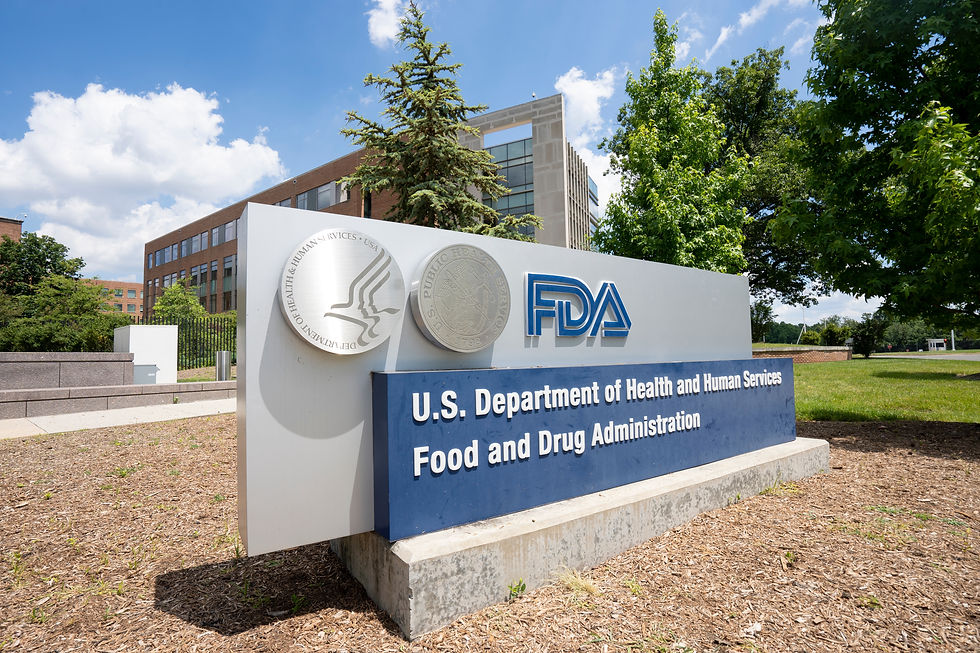
A central feature of the order is its attempt to shorten the time it takes for the U.S. Food and Drug Administration (FDA) to review and rule on New Drug Applications (NDA). Currently, this process takes around 10–12 months. The order builds on the FDA Commissioner’s National Priority Voucher pilot program, launched last summer, which aims to reduce review timelines to as little as one to two months.
The order also instructs the Attorney General to bring forward scheduling reviews, specifically after Phase 3 trials are completed but before the FDA issues a final approval decision. In theory, this could shave several months off the rescheduling process.
However, these changes are conditional. They depend entirely on drug developers successfully completing late-stage trials and submitting NDAs. As such, they do little for patients hoping for near-term access, particularly those with conditions not currently being studied in Phase 3 trials.
Prioritising “breakthrough” psychedelics
The order directs the U.S. Department of Health and Human Services to work with the U.S. Department of Veterans Affairs and private sector partners to expand clinical trial participation, data sharing, and real-world evidence generation. It prioritises substances that have already received Breakthrough Therapy designation.
In practice, this concentrates progress around a small number of highly medicalised, late-stage candidates rather than enabling broader access or exploratory research. It does not address access outside of clinical trials, nor does it engage with the wider ecosystem of psychedelic use that continues to shape real-world practice.
A targeted bet on ibogaine
One of the clearest beneficiaries of the order is ibogaine, a psychoactive compound derived from the Central African shrub Tabernanthe iboga.
The executive order instructs the Advanced Research Projects Agency for Health to provide match funding for state-led psychedelic research, starting at $50 million. This aligns directly with Texas’s existing $50 million commitment to ibogaine trials, particularly those focused on veterans.
Shortly after the signing, FDA Commissioner Marty Makary announced investigational new drug clearance for ibogaine, allowing clinical trials to proceed in the U.S.
Together, these moves create a highly targeted federal funding and regulatory pipeline, amplifying state-led investment in a single compound for a specific population.
Unlike more widely studied psychedelics, ibogaine sits somewhat outside the mainstream pharmaceutical pipeline. Its development has largely been driven by smaller actors, veteran advocacy groups, and state-level initiatives rather than major biotech firms, due in part to its perceived potential in addressing post-traumatic stress, substance dependence, and suicide risk among veterans.
Veteran-led advocacy has become one of the most effective vehicles for advancing psychedelic policy in the United States. Framing expanded research and access as a response to unmet needs among former service members has helped shift the tone of policy discussions in Washington away from countercultural associations and toward narratives of clinical necessity and public duty.
In that sense, ibogaine is not only a scientific opportunity, but a strategically advantageous entry point: politically resonant, state-backed, and aligned with a population for whom regulatory flexibility is easier to justify.
This positioning is also a function of the evidence base itself. Compared to psilocybin and MDMA, ibogaine’s regulatory pathway is constrained by relatively limited safety, pharmacokinetic, and clinical data. Early work dates back to 1993, when Drug Science Medical Psychedelics Working Group member Deborah Mash PhD, CEO & Founder, DemeRx Inc., first received FDA authorisation to study ibogaine in human volunteers at the University of Miami Miller School of Medicine. Her team at DemeRx conducted the first controlled clinical study of ibogaine in the United Kingdom in 2021, contributing to a still-emerging evidence base.
We reached out to Mash about this latest development, and who told us that “the plural of anecdote is not data. We definitely need President Trump's mandate for accelerated research and development of ibogaine.”
Her reply serves as a reminder that, despite strong advocacy and growing interest, ibogaine research remains in a comparatively early stage. In that sense, the executive order’s emphasis on accelerating research is not just strategic, but necessary for the compound to progress through formal regulatory pathways.

A potential shortcut: Right to Try
The executive order also seeks to expand more immediate patient access through the Right to Try Act, which allows patients with life-threatening conditions to access certain investigational treatments outside of clinical trials.
While the Right to Try Act does not explicitly exclude Schedule I substances, its application to psychedelics has remained unclear in practice. Efforts to include Schedule I substances under this pathway have stalled in Congress.
This order goes further, directing the FDA and the Drug Enforcement Administration (DEA) to “facilitate and establish a pathway for eligible patients to access psychedelic drugs, including ibogaine compounds.”
The directive could theoretically open a narrow but meaningful access channel prior to full FDA approval. In practice, however, Right to Try has been underused. Its impact will depend heavily on physician willingness, manufacturer participation, and how regulators interpret and implement the directive.
Political signal vs. structural change
As such, the practical impact of the executive order may be more limited and conditional than it first appears. Moreover, executive orders can signal intent and coordinate agencies, but they do not guarantee regulatory follow-through.
Last December, for example, Trump signed an executive order supporting cannabis and cannabidiol research and directing rescheduling efforts, changes that the DEA has yet to implement.
What this actually changes
What we can reasonably expect from this order is:
The acceleration of regulatory timelines, albeit once drugs are already at the end of the approval pipeline
Increased funding into specific, state-aligned research initiatives (notably ibogaine)
A potential early-access pathway via Right to Try, through efforts to clarify its applicability to Schedule I substances such as psychedelics
As such, it is less a transformation of U.S. psychedelic policy and more a targeted acceleration of existing pathways.
It does not expand access in the near term, broaden the range of conditions being studied, or address structural barriers beyond the late-stage approval process. The broader questions of access, scope, and regulatory reform remain largely untouched.
What this means for the UK
While the UK’s regulatory environment remains distinct, developments in the U.S. often shape the direction of travel for psychedelic research globally. Increased federal support, faster regulatory timelines, and expanded access pathways in the U.S. may place indirect pressure on UK institutions and regulators to remain competitive, particularly in clinical trial activity and investment. However, without comparable political momentum, the UK is likely to continue progressing through more cautious, research-led pathways rather than accelerated access models.